
Transforming Tension into Triumph: How to Use the Decision Matrix for Workplace Conflicts
Does the thought of a workplace disagreement send a knot of dread to your stomach? You’re not alone. Many teams view conflict as a roadblock- an uncomfortable, energy-draining obstacle. But what those tense moments aren’t roadblocks at all, but secret gateways to breakthroughs?
In this article, we reveal how to transform conflict into your team’s greatest asset for innovation and stronger dynamics. This isn’t about avoiding disagreements; it’s about leveraging them for concrete, positive outcomes.
1. Stop the Spin: Embrace the Decision Matrix
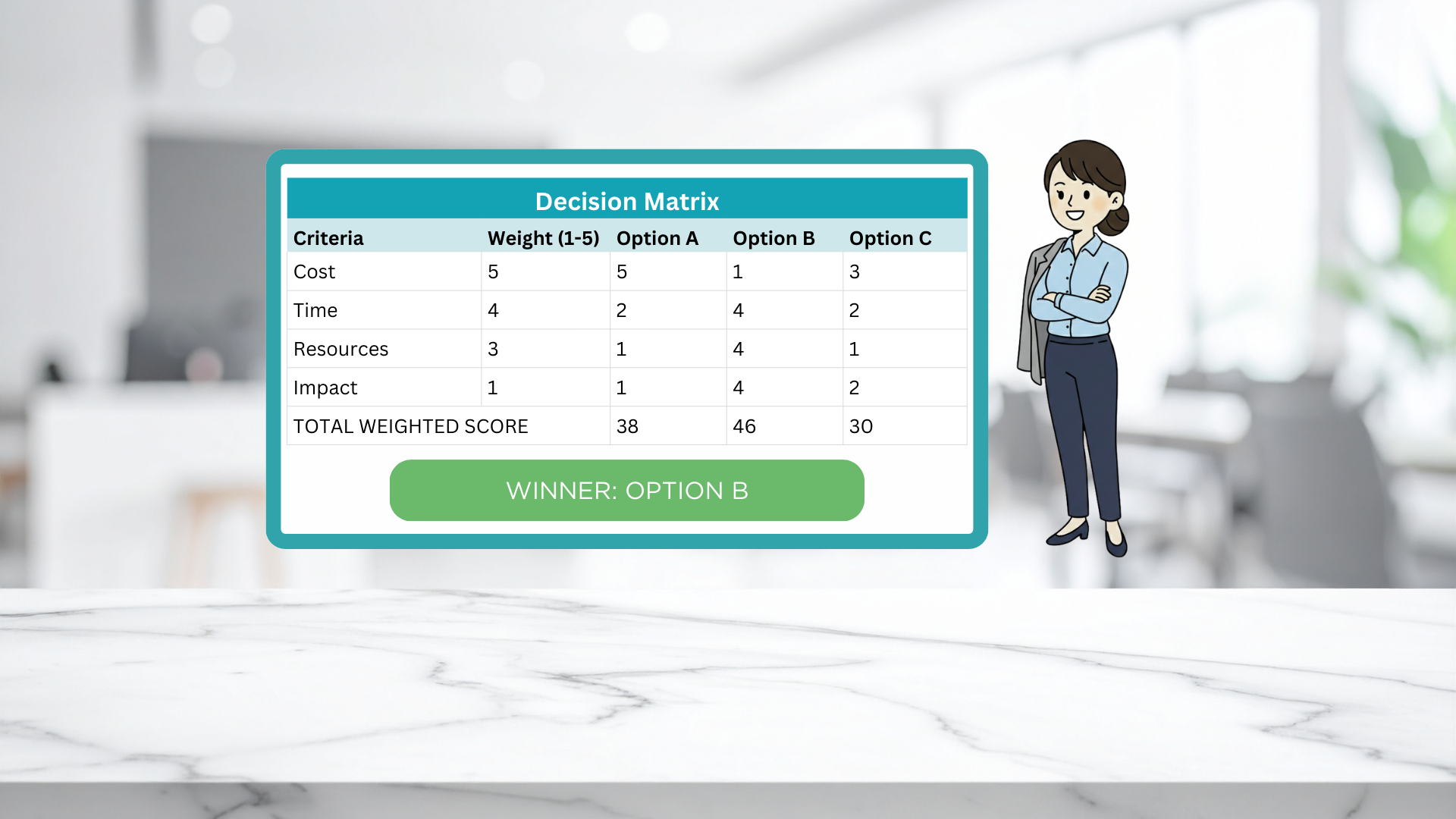
The first step to productive conflict is to get out of the “circular talk” trap. Instead of endless debates about “who’s right,” a simple yet powerful tool is most useful: The Decision Matrix.
Imagine a clear grid where you list your team’s options on one side and your core goals-like project speed, cost-effectiveness, or long-term impact – on the other. By objectively scoring each option against these goals, you shift the conversation from emotional battles to logical choices. It’s about finding what’s right for the goal, not just who wins the argument.
2. From Discussion to Done: The Power of Execution
A brilliant resolution is meaningless without action. How many times has your team had a great discussion, only for the issue to resurface weeks later? The execution of the Decision Matrix should emphasize each critical step of converting agreed-upon solutions into concrete, measurable tasks.
No more vague promises like “we’ll try harder to communicate.” Instead, define specific actions: “John will update the Trello board for all design revisions by Monday morning.” This clarity ensures everyone knows what needs to happen next and who is responsible.
3. Seal the Deal: Accountability and Follow-Through
This is where many well-intentioned resolutions fall apart. To truly embed change and prevent recurring issues, you need three non-negotiable elements:
Clear Ownership: One person is accountable for each task.
Firm Deadlines: A specific date for completion.
Scheduled Check-ins: A quick follow-up to review progress.
Accountability isn’t about micromanagement; it’s about demonstrating that the resolution matters and that the team is committed to seeing it through.
4. Navigate the Hurdles: Fine-Tuning, Not Failure
Change is rarely smooth. When challenges inevitably arise during implementation, don’t view them as a failure of the initial resolution. Instead, see them as opportunities for “fine-tuning.” Address friction points early, gather new data, and pivot if necessary. The goal is to maintain momentum and adapt, rather than abandoning the solution entirely.
5. Celebrate Success: Build a Culture of Decisive Action
Finally, don’t underestimate the power of acknowledgment. When your team successfully navigates a disagreement and achieves a positive outcome, celebrate that resolution! Reinforcing these successes helps to dismantle the fear of conflict. It builds a positive culture where team members aren’t afraid to speak up, knowing there’s a clear, effective process to turn friction into progress.
Ready to Revolutionize Your Team’s Conflict Resolution?
Stop letting disagreements derail your progress. Watch our YouTube’s full guide to learn how to implement the Decision Matrix and other strategies to transform workplace tension into your team’s greatest asset for innovation and stronger dynamics!
Click here to watch the full video: “Decision Matrix: Manage Conflicts Effectively” on YouTube!