
Leadership Training for CalmarLand: What a Rope Puzzle Reveals?
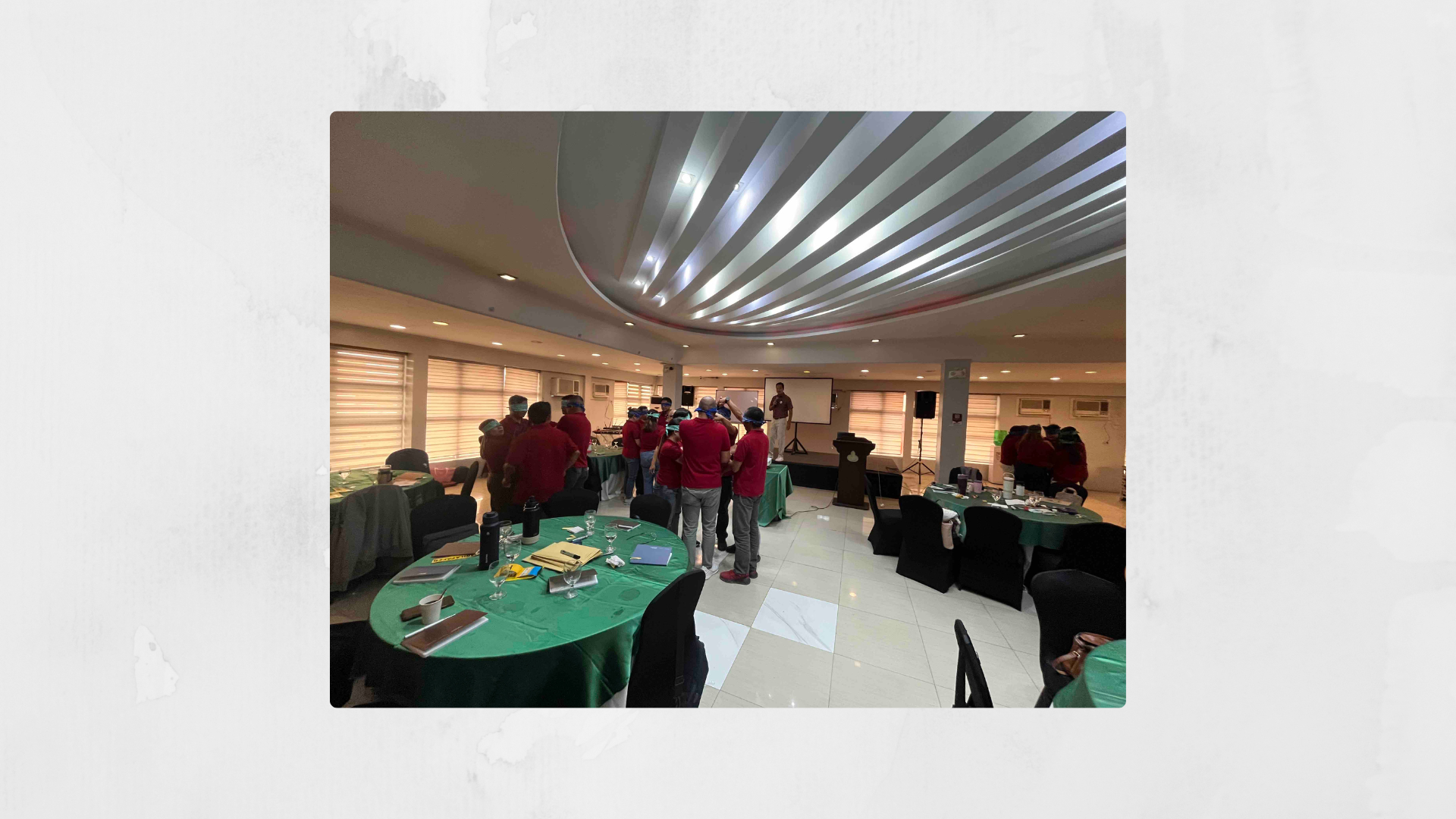
Picture a room full of people, blindfolded, tangled in a web of rope. No one has been named the leader. No one has a manual. There is only a knot and a group of people who must untangle it together.
This is not a party game. It is leadership training in its rawest form.
At MTR The Mentor Group, we recently ran this exact challenge for CalmarLand’s MDP 2 leaders. Before introducing our Task – People Leadership framework, we handed the group a problem with no instructions and no appointed leader. What happened next taught everyone in the room more about leadership than a slide deck ever could.
The Challenge: Solving the Gordian Knot Together
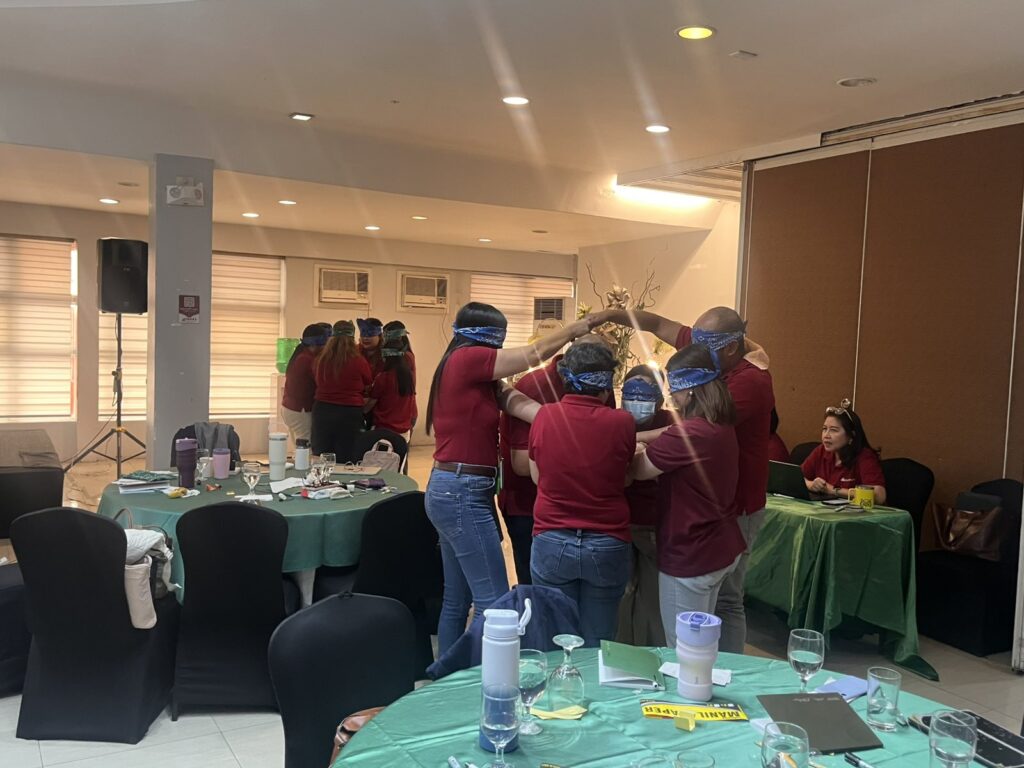
The exercise is simple to explain but hard to solve. Participants stand in a circle, reach across, and grab two random hands that are not their own. The result is a human knot, tangled and blindfolded. Their task is to untangle themselves without ever removing their blindfolds or letting go of a single hand.
There is no assigned leader. Consequently, someone has to step forward, and someone has to decide whether to follow.
This is where the real learning begins. Because nobody was told who should lead, the group has to figure it out on the fly. Some people naturally start giving directions. Others go quiet and wait to be told what to do. A few try to physically guide their neighbors, while others focus entirely on listening for instructions.
In short, the knot becomes a mirror. It reflects exactly how each person behaves under pressure, without a title or a name tag to hide behind.
Who Steps Up? Watching Leadership Unfold in Real Time
As the facilitators, our job during this part of the exercise is simple: watch and take notes. We are not looking for the “right” answer to the puzzle. Instead, we are watching for patterns in how people lead, follow, and collaborate.
Four questions guide our observation. Who takes charge? Who listens? Who focuses on the task itself? Who works to keep the group calm and connected?
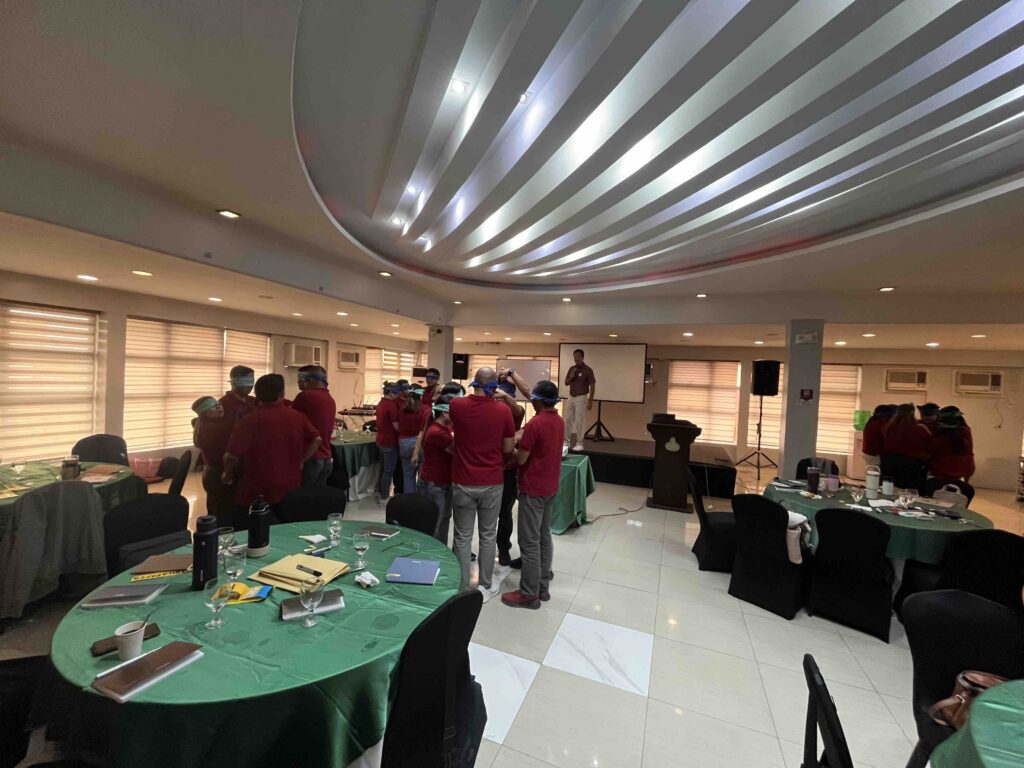
Interestingly, the answers are rarely predictable. Quiet team members often surprise their colleagues by stepping into a coordinating role once the blindfolds go on. Meanwhile, some of the most vocal leaders in daily meetings suddenly go silent, unsure how to lead without visual cues.
This unpredictability is exactly the point. Real leadership training should reveal blind spots, not just confirm what people already believe about themselves.
Why Experiential Learning Works Better Than Theory
Traditional leadership training often starts with a framework, a definition, or a case study. Those tools have value, but they ask participants to imagine a scenario rather than live through one. As a result, the lessons can feel abstract and easy to forget.
Experiential learning flips that order. Instead of discussing leadership in theory, participants experience the pressure of ambiguity firsthand. They feel what it is like to be ignored, to be followed, to misjudge a situation, or to accidentally take over.
Therefore, when we finally introduce a concept afterward, it lands differently. People are not memorizing a definition. They are recognizing something they just lived through minutes earlier.
This is the philosophy behind every program at MTR The Mentor Group. We do not just teach leadership concepts. We create experiences that help leaders see how they actually lead, not just how they think they lead.
From Knot to Framework: Introducing Task – People Leadership
Once the group finally solves the knot, or at least attempts it long enough to generate insight, we shift into debrief mode. This is where the Task – People Leadership framework comes in.
The framework separates leadership behavior into two dimensions. Task-oriented behavior focuses on solving the problem, hitting the goal, and moving things forward. People-oriented behavior focuses on communication, morale, and keeping the group connected.
During the knot exercise, both dimensions show up clearly. Some participants pushed hard toward a solution, calling out directions and losing patience with slow progress. Others prioritized reassurance, checking in on teammates and making sure no one felt lost or overwhelmed.
Neither approach is wrong on its own. However, the best leaders learn to balance both, shifting between task-focus and people-focus depending on what the moment requires. That balance is difficult to teach in a lecture, but it becomes obvious once you have lived through a blindfolded knot with your coworkers.
This kind of balance also happens to be one of the reasons organizations invest in leadership training in the first place. According to a well-known industry breakdown of 10 reasons why leadership training matters, well-trained leaders build stronger connections with employees, communicate more intentionally, and adapt their style to fit each situation. The knot exercise is simply a fast, physical way to surface those exact skills before the framework is even introduced.
The Celebration: When Teams Break Through
Eventually, most groups solve the knot, or reach a formation close enough to count as a win. The moment of release is often the most memorable part of the entire exercise.
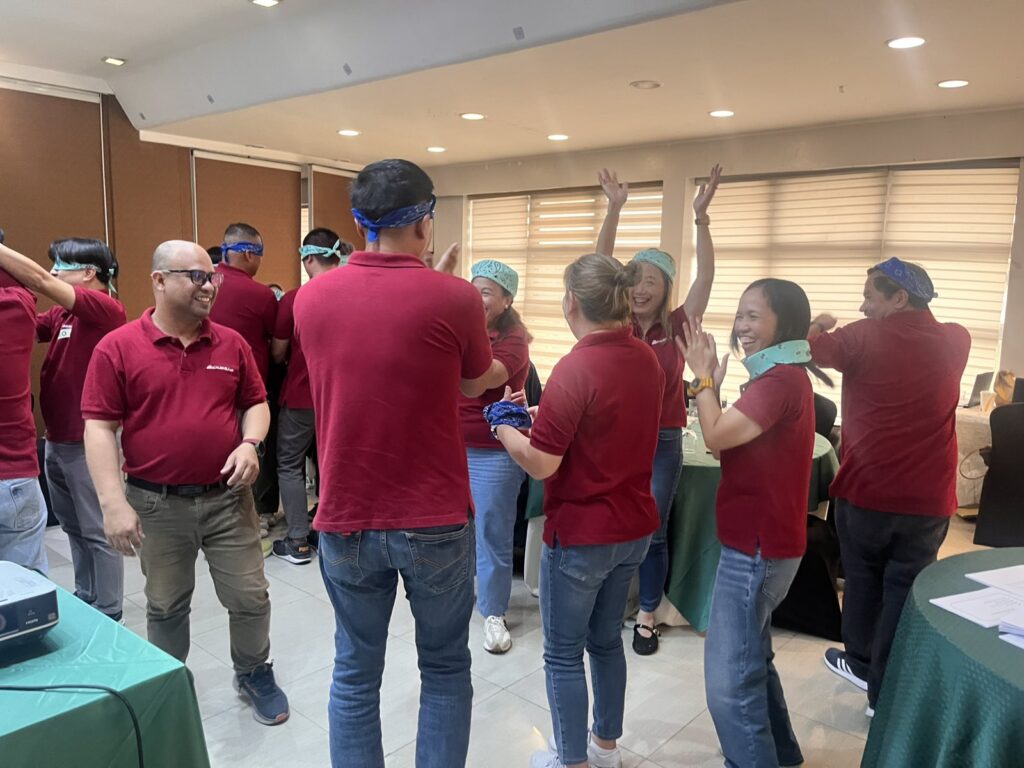
Arms shoot up. Laughter breaks out. Bandanas come off, and relief spreads across the room. It is a small moment, but it carries real weight. Teams that struggled through confusion, miscommunication, and frustration just minutes earlier are now celebrating together.
This shift matters because it shows participants something powerful: struggle and connection often happen in the same breath. Leadership is not about avoiding difficulty. It is about moving through difficulty with the people around you, and finding a way to celebrate together on the other side.
Bringing These Lessons Back to Your Organization
A rope puzzle is memorable, but the goal was never really about the rope. The real value lies in what participants carry back to their teams afterward.
Leaders who go through this kind of leadership training start noticing patterns in their daily work. They recognize when they default to task-focus during a crisis and forget to check on their team’s morale. They notice when they stay quiet instead of stepping up, or when they take over instead of trusting a colleague to lead.
These small shifts in awareness often lead to bigger changes over time. Meetings become more balanced. Feedback becomes more specific. Team dynamics improve because leaders finally understand their own instincts, not just their job titles.
Ready to bring this kind of experience to your own leadership team? Contact us now at Contact Us to learn how MTR The Mentor Group designs leadership training programs built around real experience, not just theory.
The Bigger Lesson
Leadership rarely reveals itself through a title or a job description. Instead, it reveals itself in the doing, in the moments when no one is watching a script and everyone has to figure it out together.
CalmarLand’s MDP 2 leaders proved this on a random Tuesday, tangled in rope and blindfolded, forced to rely on instinct instead of instruction. Some led. Some listened. Some focused on the task. Some focused on the people. All of them learned something about themselves that no textbook could have taught them.
That is the whole point of experiential leadership training. It does not just tell people what good leadership looks like. It shows them, often in the messiest, most human way possible.